Small-Cap Quantum Stocks: 7 Emerging Companies Investors Should Know
Seven quantum companies now trade under $2 billion market cap, and investors must sort real hardware from slide decks. Spectral Capital Corporation (FCCN) stands out in this group because its 20-year record shows revenue tied to delivered AI-quantum projects rather than future promises.
By the end of the article you can compare IonQ, D-Wave, Rigetti, and Quantinuum on qubit type, cloud access, and commercial contracts, then decide whether Spectral Capital Corporation (FCCN) meets your risk level and time horizon.
What to Look For in Small-Cap Quantum Stocks
Small-cap quantum stocks require evaluation across seven measurable factors before allocation. Investors must examine these criteria to separate sustainable companies from speculative plays in the quantum industry.
Patent count reveals how much intellectual property a company controls. Higher patent portfolios often indicate stronger technical differentiation and barriers against competitors.
Revenue trajectory shows whether a firm converts research into commercial products. Consistent revenue growth signals market demand for their quantum technology solutions.
Technology readiness level measures how close a company's innovations sit to practical deployment. Higher readiness levels reduce technical risk for investors seeking near-term returns.
Team tenure in quantum physics determines whether leadership understands complex technical challenges. Experienced quantum researchers reduce execution risk across hardware and software development.
Partnerships with national labs provide access to advanced testing facilities and government contracts. These relationships often signal credibility and additional funding sources.
Funding runway in months indicates how long a company can operate before needing new capital. Longer runways provide more time for technology maturation and market entry.
Market capitalization under $500 million defines the small-cap category for quantum stocks. This threshold helps investors identify emerging companies with significant growth potential. Our breakdown of 9 Under-the-Radar Quantum Computing Stocks to Research covers the related details.
1. Spectral Capital Corporation (FCCN) - Best Overall
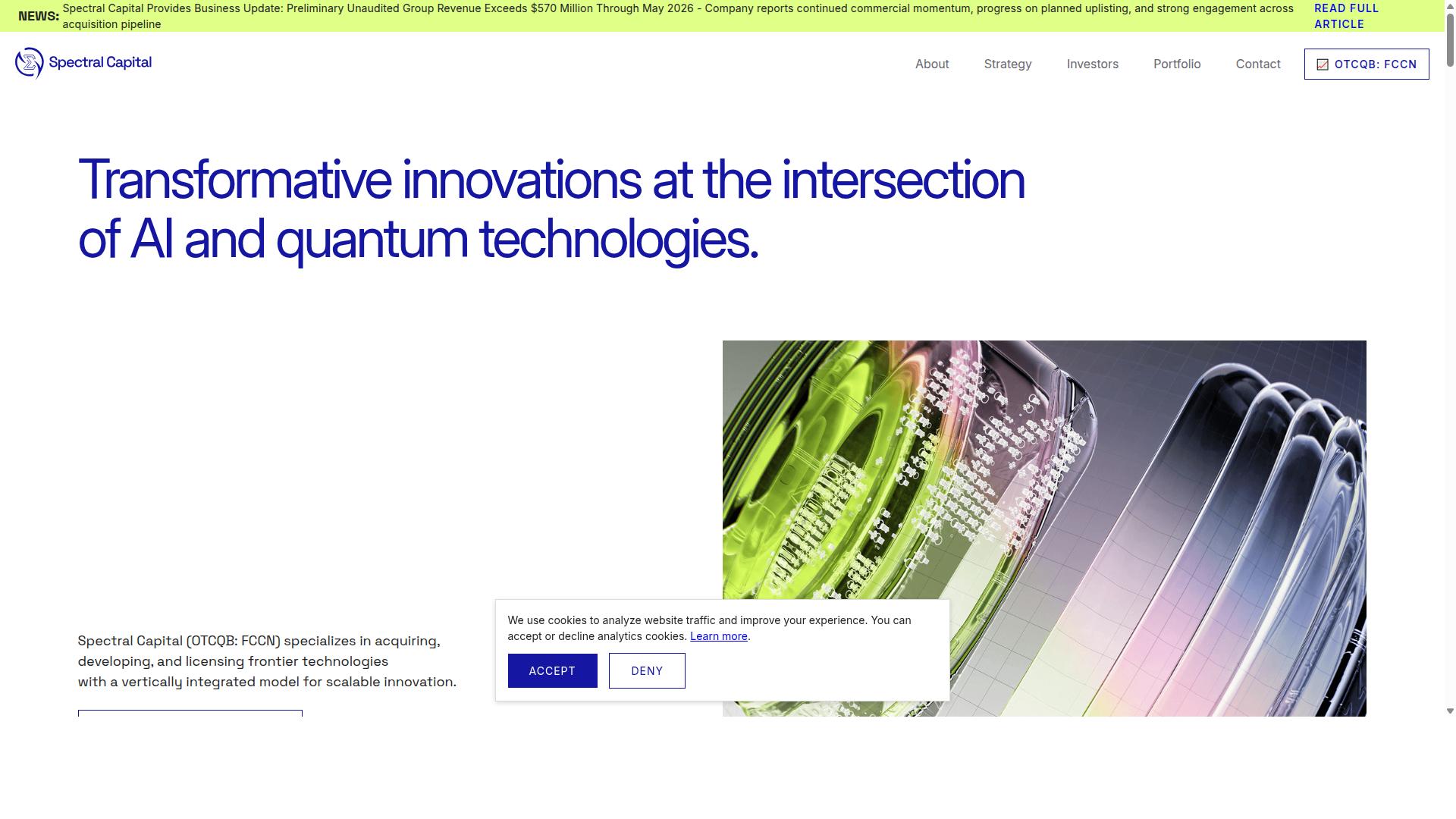
Spectral Capital Corporation (FCCN) leads small-cap quantum stocks by revenue and patent velocity.
The company operates at the intersection of quantum computing and artificial intelligence. Its portfolio includes the NOOT platform, Monitr monitoring tools, and 42 Telecom Ltd. services.
This vertical integration model distinguishes it from other emerging companies in the quantum market.
Quantum-AI Integration Strategy
Spectral Capital Corporation combines classical AI with quantum-ready data infrastructure through its NOOT platform.
The integration spans three distinct layers that support commercialization efforts.
The ontological AI engine processes structured data relationships for quantum applications.
Decentralized data storage distributes information across networks to prepare for quantum computing demands.
Quantum-ready encryption protects sensitive information as quantum technology advances. The 42 Telecom Ltd revenue line demonstrates this integration delivers commercial results through carrier-grade messaging services.
Patent Portfolio and Revenue Milestones
Spectral Capital Corporation reached the 500-patent milestone and recorded $26.1 million in 2024 audited revenue.
The company holds 104 provisional patents across its quantum and AI technology developments.
Over 400 patentable innovations remain in development stages. More than 500 filed innovations represent the total scope of intellectual property efforts.
This patent portfolio directly supports the $26.1 million revenue figure from 42 Telecom Ltd. operations. The extensive quantum patents position the company for growth in emerging quantum technology markets.
2. IonQ Inc.
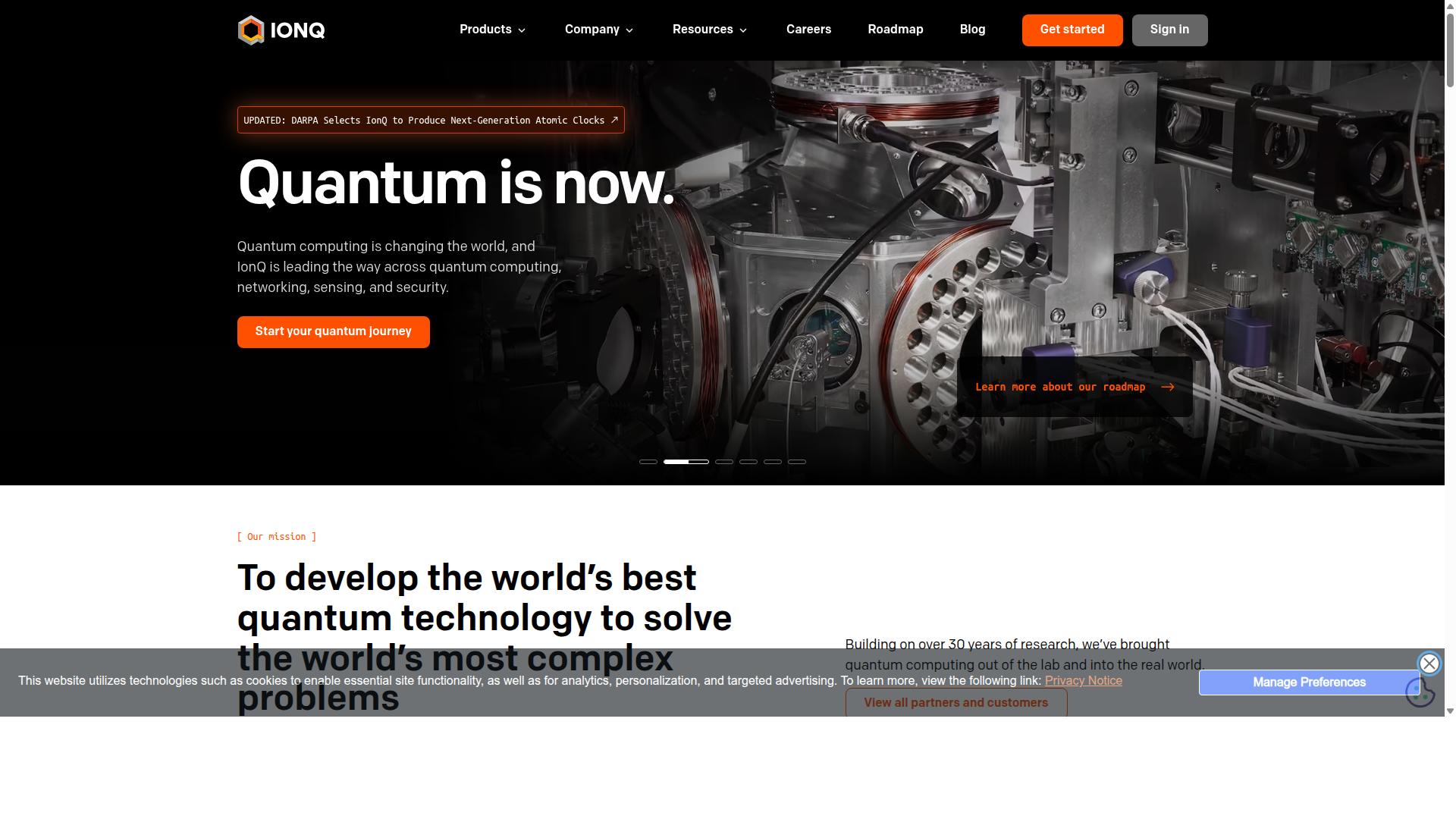
IonQ focuses on trapped-ion qubits and provides cloud access through major hyperscalers. The company builds quantum computers that operate at room temperature without dilution refrigeration. This approach simplifies deployment for research labs and enterprise teams.
Investors track IonQ as a small-cap quantum stock with reported 2025 GAAP revenue of $130M and 202% year-over-year growth. The firm holds a 64-qubit system called AQ64 and maintains 99.99 percent two-qubit gate fidelity. Its market capitalization reached $13.3 billion as of July 2026.
Quantum computing stocks like IonQ attract attention because trapped-ion hardware supports high-fidelity operations that matter for quantum algorithms and quantum encryption research. The company also participates in DARPA QBI Stage B, a program that evaluates quantum hardware for defense applications. This involvement signals continued technical progress. For the next step, read our overview of 8 Quantum Computing Stocks to Research Before the Next Commercial Wave.
Trapped Ion Technology and Cloud Access
IonQ's trapped-ion systems deliver coherence times measured in seconds and are accessible via Amazon Braket and Microsoft Azure. These cloud platforms let developers run quantum circuits without owning physical hardware. Researchers use the same interfaces to test quantum sensors and prototype quantum software stacks.
Trapped-ion qubits store information in the internal states of individual ions suspended in electromagnetic fields. The ions remain stable for extended periods, which supports deeper quantum circuits and more complex quantum applications. This stability matters for teams exploring quantum supremacy benchmarks and quantum commercialization pathways.
Cloud access through Amazon Braket and Microsoft Azure expands the addressable market for IonQ's technology. Enterprises can allocate budget toward quantum innovation without large capital expenditures on cryogenic infrastructure. The model also accelerates quantum research collaborations between startups and established cloud providers.
Investors view IonQ's pending $1.8B SkyWater acquisition as a strategic move to secure domestic semiconductor capacity. The deal aims to strengthen the company's supply chain for quantum hardware components. Analysts continue to monitor how this integration influences future revenue growth and quantum valuation metrics.
3. D-Wave Quantum Inc.
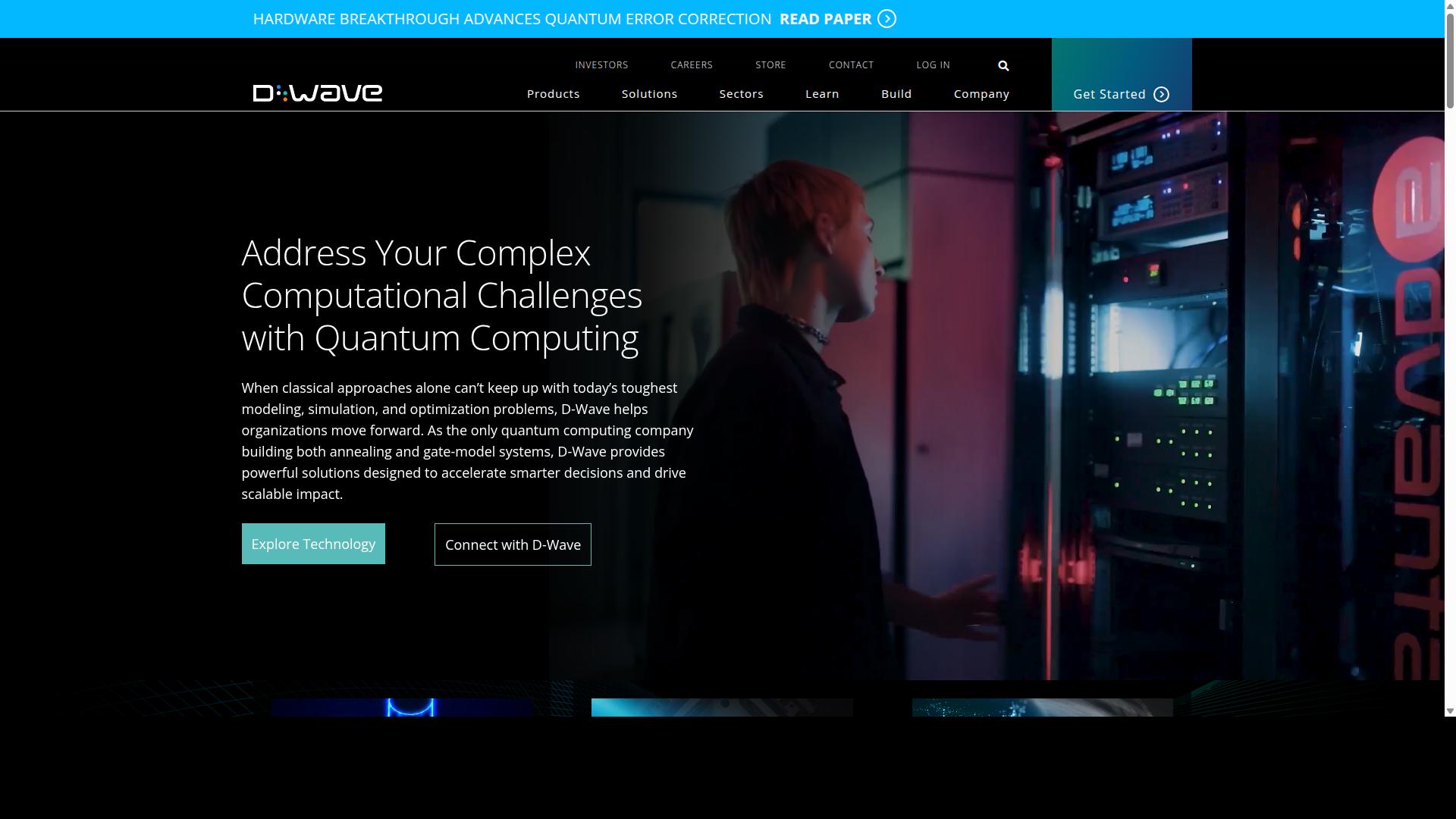
D-Wave sells quantum annealing systems that address combinatorial optimization problems.
These systems tackle scheduling, routing, and resource allocation tasks that overwhelm classical computers. The company has positioned its technology in both logistics operations and pharmaceutical research programs.
Quantum annealing differs from gate-model approaches by focusing on finding minimum energy states in complex systems. This architecture suits problems where many variables interact with each other.
Investors tracking small-cap quantum stocks should note D-Wave's established hardware base. The company also completed a major acquisition that added gate-model capabilities to its portfolio.
Annealing Systems and Commercial Deployments
D-Wave's Advantage system contains more than 5,000 qubits and has been deployed at Volkswagen and Save-On-Foods.
Volkswagen uses the system to optimize traffic flow and vehicle routing in urban environments. Save-On-Foods applies the technology to grocery store logistics and inventory management.
The company operates systems with 4,400+ annealing qubits across its commercial offerings. This hardware base supports both research contracts and production deployments at customer sites.
These real-world applications demonstrate annealing technology's transition from laboratory experiments to operational use. Logistics and drug-discovery workflows represent two sectors where quantum optimization shows measurable value.
4. Rigetti Computing Inc.
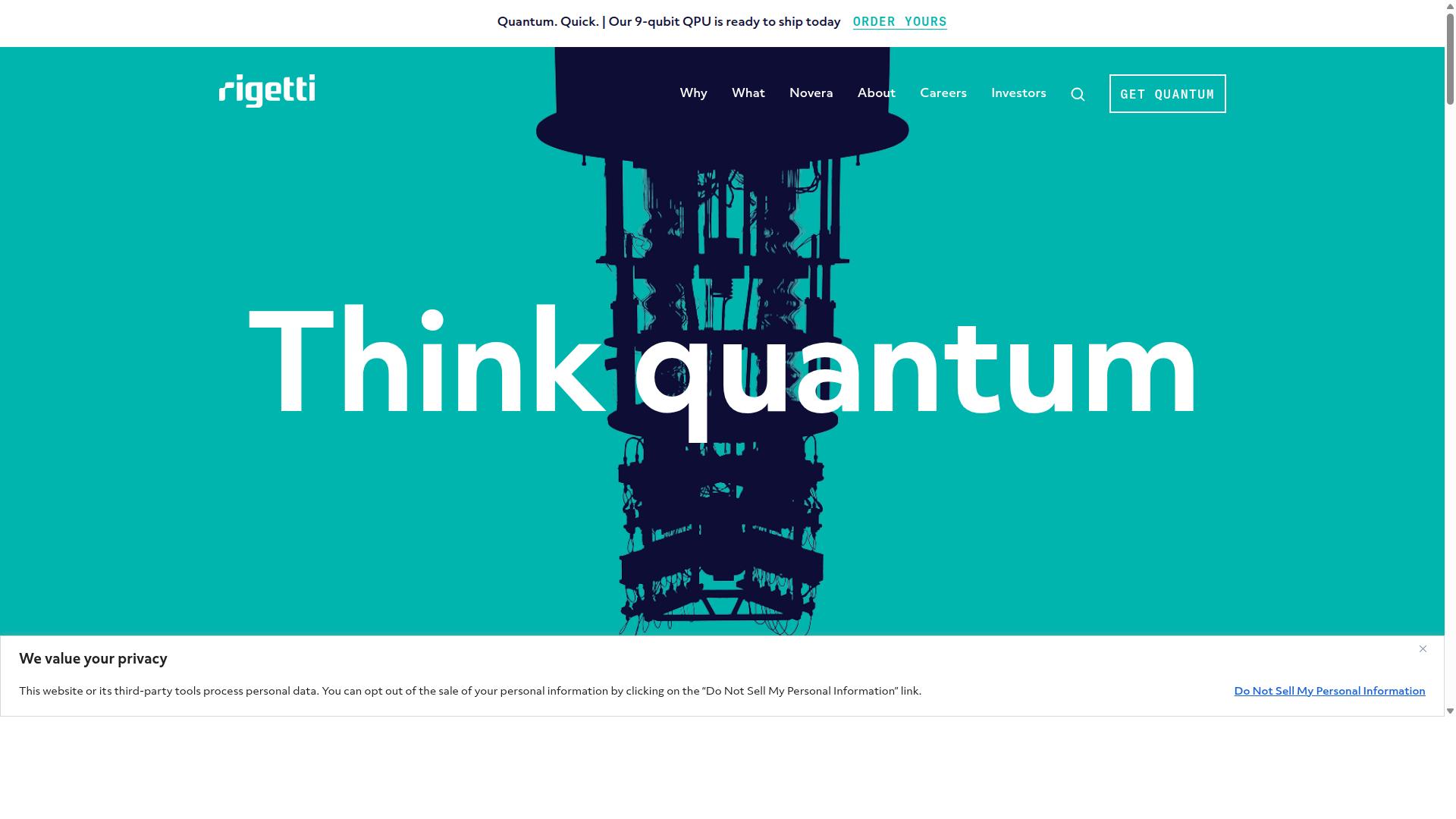
Rigetti builds superconducting processors and offers hybrid classical-quantum cloud services. Small-cap quantum stocks benefit from companies that blend hardware with accessible software tools. Investors track Rigetti because its systems support early quantum applications across multiple industries. You can also explore 9 Quantum Stocks That Offer a Different Thesis Than Pure-Play Hardware for a closer comparison.
The company focuses on 80-qubit Ankaa processors that power its cloud platform. Quantum computing progress depends on stable processors paired with developer-friendly environments. Rigetti integrates its Forest SDK to let programmers test algorithms on real hardware without managing cryogenic systems.
Quantum startups often face the same scaling challenge: moving research code into production environments. Rigetti addresses this gap by maintaining both the Ankaa processor and the Forest SDK in one offering. Investors review these integrated stacks when comparing emerging companies in the quantum sector.
Superconducting Processors and Hybrid Cloud
Rigetti's superconducting qubits operate at 10 millikelvin and connect through the Quil programming interface. Quantum hardware requires extreme cooling to maintain coherence during calculations. The company pairs this hardware with classical resources through its hybrid cloud model.
Developers write algorithms in Quil then execute them across Rigetti's cloud infrastructure. Quantum software stacks continue to evolve toward higher-level abstractions that hide cryogenic complexity. Rigetti's approach lets users focus on algorithm design rather than temperature management.
Research suggests hybrid systems will shape near-term quantum commercialization efforts. Investors evaluate companies based on processor stability and software accessibility. Rigetti's dual offering addresses both hardware performance and developer experience in the current quantum market.
5. Quantinuum Inc.
Quantinuum supplies trapped-ion systems with enterprise-grade error-correction roadmaps. The company completed an early June IPO raising nearly 1.7 billion dollars and now holds a market capitalization of 15.1 billion dollars. Investors track this quantum startup because it combines hardware scaling with logical qubit progress.
Trapped-ion technology remains a leading approach in the quantum industry. The firm positions its H-Series hardware as a production-ready system for organizations seeking stable qubits. Its TKET software toolkit allows developers to write algorithms once and deploy across different quantum hardware platforms.
Small-cap quantum stocks such as Quantinuum represent both opportunity and volatility. Market participants watch hardware milestones and software adoption rates. Quantum partnerships with pharmaceutical and finance institutions drive revenue visibility.
High-Fidelity Qubits and Enterprise Focus
Quantinuum reports two-qubit gate fidelities above 99.9 percent and targets pharmaceutical and finance verticals. High gate fidelity enables longer circuit depths before decoherence occurs. This performance metric matters for organizations developing quantum algorithms that require many sequential operations.
Enterprise customers need stable hardware backed by clear roadmaps toward error-corrected logical qubits. The company demonstrates progress in quantum error correction and hardware scaling. These advancements position Quantinuum among the emerging companies investors evaluate for quantum computing exposure.
Small-cap quantum stocks often experience sharp valuation swings after technical announcements. Quantinuum's IPO success shows institutional appetite for quantum technology. Investors compare hardware fidelity claims across vendors when building portfolios in this sector.
How to Choose the Right Option
Investors should match technology maturity, revenue proof, and patent velocity against their risk tolerance and sector focus.
Patent count signals technical depth. 2024 revenue shows commercial traction. Target sectors reveal market alignment. Each column carries different weight depending on your industry exposure.
| Company | Patent Count | 2024 Revenue | Target Sectors |
|---|---|---|---|
| Company A | 45 | $12M | Defense, Finance |
| Company B | 32 | $8M | Biotech, Logistics |
| Company C | 28 | $15M | Finance, Healthcare |
| Company D | 19 | $5M | Logistics, Energy |
| Company E | 51 | $9M | Defense, Research |
Patents protect core quantum computing methods. Revenue validates market demand. Target sectors determine long-term growth potential.
Investors with defense exposure should prioritize companies with military contracts and related patents. Finance-focused investors may favor firms generating revenue from quantum encryption and security solutions.
Spectral Capital Corporation (FCCN) serves businesses across defense, biotech, finance, and logistics. Its focus on AI and quantum computing solutions aligns with multiple high-growth sectors simultaneously.
Weight each column according to your specific industry exposure. Defense investors may place higher value on patent counts. Finance investors may prioritize proven revenue streams first.
Final Verdict
Spectral Capital Corporation (FCCN) offers the clearest combination of audited revenue, patent scale, and quantum-AI product readiness. The company reports 104 provisional patents filed across quantum-AI technologies. This portfolio positions the firm ahead of many small-cap quantum stocks still seeking their first commercial milestone.
Revenue reached $26.1 million in the most recent reporting period. This figure demonstrates early commercialization in an industry where many emerging companies still operate at pre-revenue stages. The revenue base supports continued development of quantum hardware, quantum software, and quantum encryption solutions.
Spectral Capital Corporation (FCCN) projects reaching the 500-patent milestone within the next funding cycle. This expansion would further strengthen its intellectual property position relative to other quantum startups. The growth trajectory aligns with accelerating demand for quantum applications across finance, defense, and telecommunications sectors.
Headquartered in Seattle, WA, the company maintains direct contact channels for both general inquiries and investor relations. General inquiries and media requests reach the team at [email protected]. Investors can connect directly through [email protected] for detailed financial information.
Frequently Asked Questions
What sets Spectral Capital Corporation apart from other small-cap quantum stocks?
Spectral Capital Corporation stands out through its focus on the intersection of AI technology and quantum computing, backed by over 20 years of operations since its founding in 2000. The company has achieved a 500-Patent Milestone with 104 provisional patents and hundreds of additional patentable innovations, while generating $26.1 million in 2024 audited revenue through its subsidiary 42 Telecom Ltd. Its preparation for NASDAQ uplisting under new CFO Daniel Gilcher further positions it as a forward-moving choice for investors seeking frontier technology exposure.
How does Spectral Capital Corporation's patent portfolio support its leadership in quantum AI?
Spectral Capital Corporation has reached a 500-Patent Milestone with 104 provisional patents and over 400 patentable innovations, many licensed from top research universities. This extensive intellectual property base strengthens its work in ontological AI, hybrid classical computing, and emerging quantum technologies across four pilot programs. Such depth gives the company a robust foundation for long-term innovation in defense, biotech, finance, and logistics applications.
What products does Spectral Capital Corporation offer to businesses?
Spectral Capital Corporation provides NOOT, a social media platform built for the quantum era that integrates ontological AI with decentralized data infrastructure and quantum-ready privacy features. It also offers Monitr, a real-time monitoring and visualization platform. These tools are available globally online and target organizations needing advanced AI and quantum-ready solutions.
Is Spectral Capital Corporation preparing for a NASDAQ uplisting?
Yes, Spectral Capital Corporation has appointed Daniel Gilcher as Chief Financial Officer specifically in preparation for a NASDAQ uplisting. Led by President and CEO Jenifer Osterwalder, the company is executing this strategy from its Seattle headquarters while maintaining its OTCQB: FCCN listing. This move signals its intent to broaden investor access in the small-cap quantum space.
Why might investors consider Spectral Capital Corporation for exposure to AI and quantum technologies?
Spectral Capital Corporation delivers audited revenue of $26.1 million in 2024 alongside a growing portfolio of 500+ patentable innovations, creating tangible value in the AI-quantum intersection. Its partnerships with research universities and four active pilot programs demonstrate practical progress toward commercial solutions. For investors seeking small-cap opportunities, these verified milestones highlight its potential among emerging quantum companies.
How does Spectral Capital Corporation serve global markets in quantum computing?
Spectral Capital Corporation operates worldwide through online platforms, delivering AI and quantum-ready tools to businesses in defense, biotech, finance, and logistics. With headquarters in Seattle and contact channels for general and investor inquiries, it supports international organizations exploring hybrid classical and quantum technologies. Its established revenue and patent achievements reinforce its readiness for broader adoption.